24/7 AI Receptionist & Chat Dispatcher for Small Service Businesses
Instant booking without tying up your phone lines
AI Receptionist
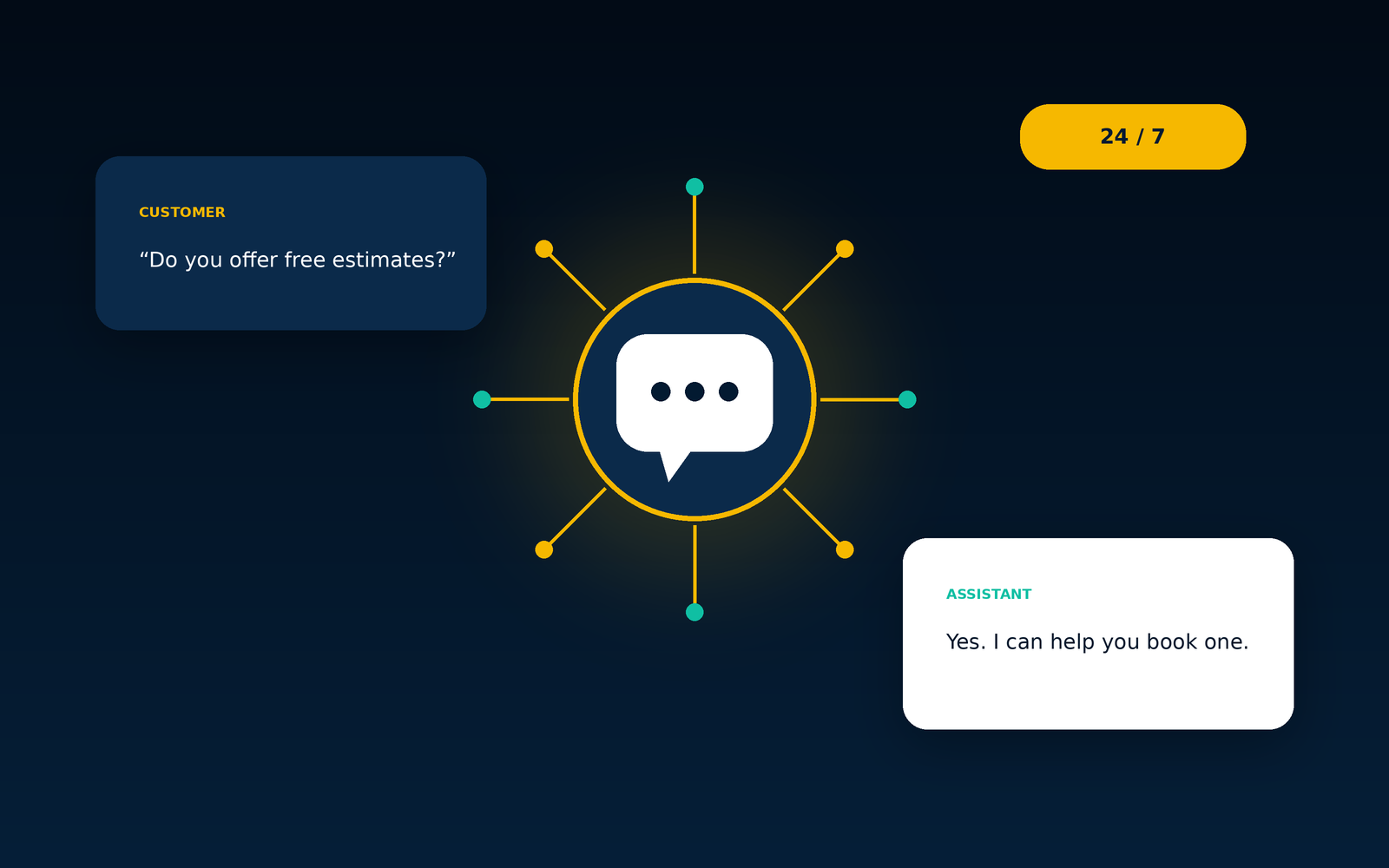
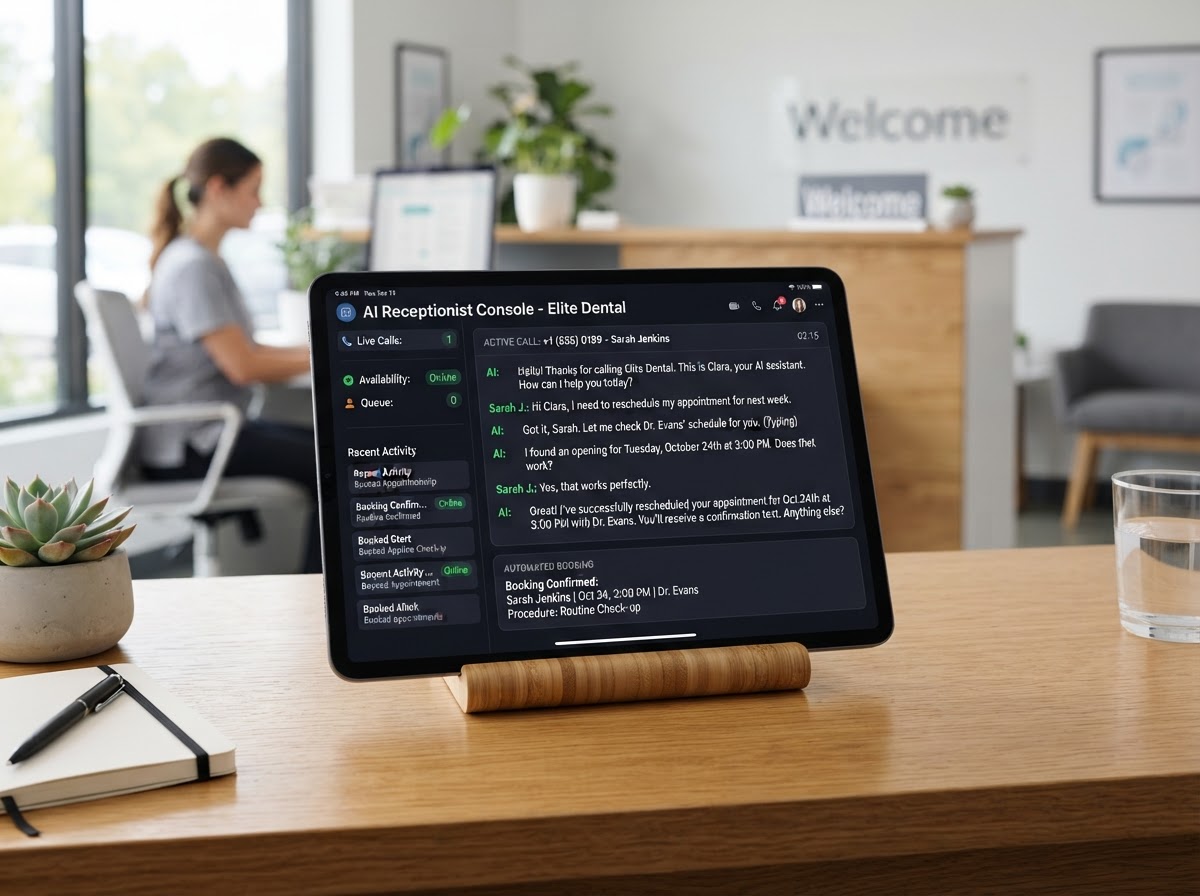
Your 24/7 AI receptionist for small service businesses. It answers homeowner inquiries, offers real-time calendar slots, and books appointments without human intervention. Captures evening and weekend service inquiries when you can't pick up the phone.
How We Build & Run This System
We start by looking at how work moves through your business today: where inquiries come in, how fast they get answered, what happens to a quote after it goes out, and where jobs stall. Then we replace the manual steps that depend on you with automated ones that do not.
Every piece is set up around your real service areas, your trade, your pricing, and your schedule. We handle the technical setup, the carrier registration for business texting, the dispatch calendar, and the review campaigns so your team can stay on the work in the field.
Once it is running, you can see where every lead came from, which quotes are sitting open, and where revenue is being lost. That visibility is what lets you fix the next leak instead of guessing at it.
Captures evening and weekend service inquiries when you can't pick up the phone.
Go deeper on the AI receptionist
The AI receptionist is one piece of the full system. It is how a trade shop answers and books calls without the owner on the phone. revenue operating system for trade businesses ties it together.
Explore the operating system Pricingsee the retainer tiers to compare Foundation, Growth, and Command.
See the retainer tiers Go DeeperAI Receptionist vs Voicemail. Why an AI receptionist books the job where voicemail loses the caller.
Read moreAI Receptionist for Small Service Businesses
Direct answers about 24/7 automated call answering.
The best AI receptionist for a small service business is one that is trained on your specific trade services and pricing, can book appointments directly into your live calendar, and responds to missed calls with an automatic text within 10 seconds. North & Nova's AI receptionist answers homeowner inquiries 24/7, qualifies leads, offers real-time calendar slots, and routes emergency calls with priority rules, so evening and weekend inquiries never reach a competitor because you were on a job. It pairs with missed call text back so even a call it cannot answer gets an instant reply. Read the full answer.
An AI receptionist for a trade business works by answering incoming calls and chats conversationally, using knowledge of your specific services and pricing ranges. It qualifies the homeowner, offers available calendar slots, books the appointment directly into your dispatch calendar, and sends a confirmation. If a call is missed, it fires an automatic text within 10 seconds to keep the lead. Every interaction syncs into your CRM for service businesses timeline so you have full context. Read the full answer.
Yes. North & Nova's AI receptionist includes emergency routing rules that recognize urgent keywords like 'no heat,' 'burst pipe,' or 'leak,' and escalate those calls immediately to your on-call technician via SMS alert. Non-emergency inquiries flow into the standard booking calendar, so the system separates a 2 a.m. no-heat call from a routine maintenance request automatically. Read the full answer.
An AI receptionist for a small business is included in North & Nova's complete Business Operating System at $997 per month, which also includes the CRM, missed call text-back, smart website, and reputation management. For most trade shops, the AI receptionist pays for itself by capturing just one or two emergency calls per month that would otherwise have gone to voicemail and then to a competitor. See the full retainer tiers for what is included. Read the full answer.
Ready to see which systems your shop is missing?
In 15 minutes, we review your current website, Google profile, lead follow-up, and point out the leaks where money is falling through the cracks.