Review Velocity: Why Asking Sooner Gets More Google Reviews
Ask every customer for a Google review within 15 minutes of the work being done, the same way every time. Here's why timing matters and how to automate it.
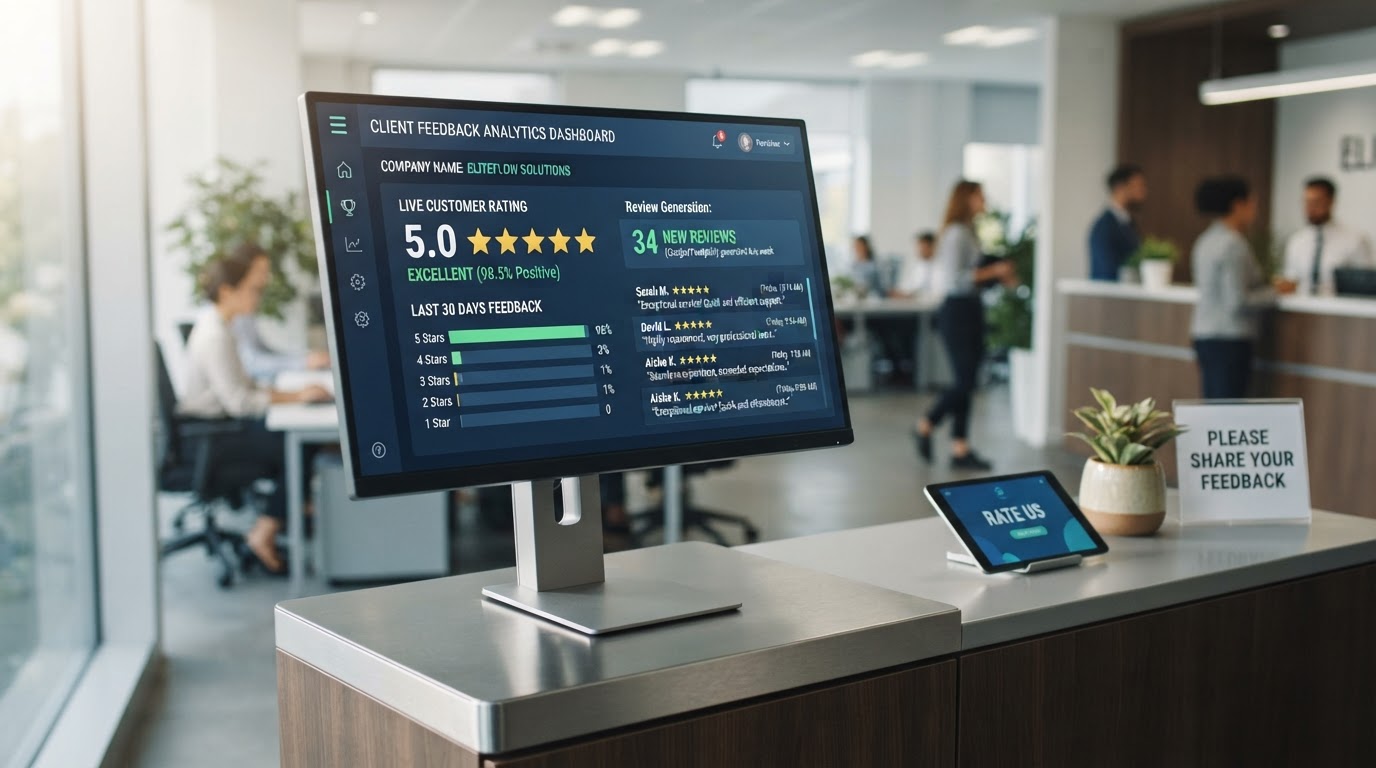
Most local businesses know Google reviews matter. Fewer have a real system for asking. The request goes out at the end of the month in a batch email, or it lives on a paper card that ends up in a truck, a purse, or the recycling bin. The work was good. The review never shows up.
The fix is less about clever wording and more about timing and consistency.
Why sooner works better
People are most likely to follow through while the visit is fresh. Think about the moment a roof repair is finished and the crew is packing up, the end of a med spa appointment, the day a catering order lands for an office lunch, or the afternoon a family gets keys at a closing. The customer is still thinking about you. A day or two later, they are back to their own week, and a review request becomes one more thing to get to.
That's an opinion from watching how people behave, not a lab result. But it matches what most owners already know: the longer you wait, the harder it is to get anyone to act.
Ask everyone, the same way
The other half of review velocity is asking every customer, not just the ones you think loved you. Some businesses send a "How did we do?" question first and only pass happy customers to Google. That's called review gating, it goes against Google's rules, and it can put your profile at risk.
The compliant way is simple. Every customer gets the same direct link to your Google review form. Nobody is screened first. If a low score comes in, the owner gets an alert within 60 seconds so they can reach out and make it right, in public and in private.
Text or email?
For most local businesses, a text is the easiest ask to act on. It shows up on the phone the customer already has in hand, and a direct link means they don't have to search for your profile. Email still works well as a backup for customers who prefer it or didn't get the text.
What the automation actually sends
Here's an example of the automated text our system sends after the work is done:
"Hi {first name}, thanks for choosing [Business]! If we did right by you, a quick Google review would mean a lot: {review link}. Thank you! Reply STOP to opt out."
It's an automated message, triggered by a real "work done" moment in your system: an invoice paid, a job marked complete, or an appointment that showed. The owner doesn't have to remember. The front desk doesn't have to remember. It goes to every customer, every time.
Making it steady
Review velocity is about a steady pace, not a burst. A handful of new reviews every week tells future customers you're busy and still doing good work. A pile of reviews from one month two years ago tells them less.
A steady pace comes from three habits:
- Ask every customer within 15 minutes of the work being done.
- Use the same link and the same message every time.
- Reply to reviews, good and bad, so the next reader sees a business that pays attention.
That's how our Google review management services are set up: one request, sent to everyone, within 15 minutes of the work being done. Replies are drafted with AI and approved by a person, and negative reviews always get a human reply.
Want review requests going out automatically?
Want review requests going out automatically after every job? Book a 15-minute review check, and we'll look at how you ask today.
See how review management worksNorth and Nova Systems Editorial
Revenue systems, CRM architecture, and local trade operations headquartered in Rochester, NY.
Keep reading

Why Your Shop Drops 30% of Revenue Between Find and Paid
The six steps where work gets won or lost, and the operational gaps that quietly cost trade businesses a third of their revenue.
The 10-Second Rule: Why Missed Calls Become Lost Customers
Homeowners in emergency mode do not leave voicemails. They tap the next local result. Here is how instant text-back keeps every lead.
Owning the Google 3-Pack in Your Service Radius
Citations, schema, and neighborhood landing pages: the exact pieces that put your shop first when someone searches 'near me.'
Looking for more? Browse our free guides and tools for trade businesses.